Derbyshire Wildlife Trust Garden – RHS Chatsworth 2018

Congratulations to both Derbyshire Wildlife Trust and the Experian volunteer team who did a great job building the stand for RHS Chatsworth flower show. STOP PRESS – We won an RHS 3 Star Award!!

Not only was I thrilled to be asked to work with the trust, I really enjoyed a different type of design challenge. Usually I have an existing garden with architecture, features and plants or trees to work with. Here I had a blank canvas on which to create a garden to illustrate the beautiful and varied Derbyshire landscape. The brief was also to create a garden which could be built by staff & volunteers with no landscaping or horticultural experience. A garden which could be taken apart and moved to another events, and ultimately to The Whistlestop Visitor Centre at Matlock Bath for the public to enjoy. So simplicity, portability, and durability were key considerations.

Materials & Concept Board

After we worked to tighten up the brief, we agreed on a concept for the garden and the key materials. Then I started deconstructing the county map, and playing with shapes with marker pens, highlighting key zones; The Dark Peak, The White Peak, Derwent valley,  farmland, Derby city etc. And finding a way to put it back into a 4m square garden. It was important that the design was a garden, not a landscape model, and seating and a canopy were essential to make a comfortable and engaging spot. 
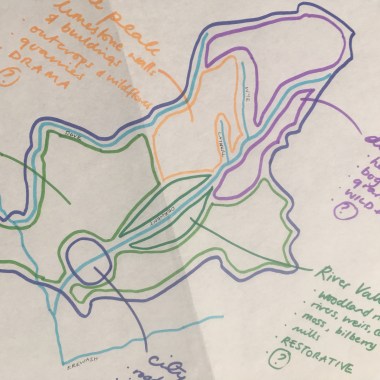
Map deconstruction
Map deconstruction


We wanted to create height, Derbyshire rises to over 2,000 ft above sea level, and the obvious material to use was stone. The distinctive outcrops of stone and geology from a volcanic past, have for centuries provided local building material which now characterises the towns, villages and farmland.

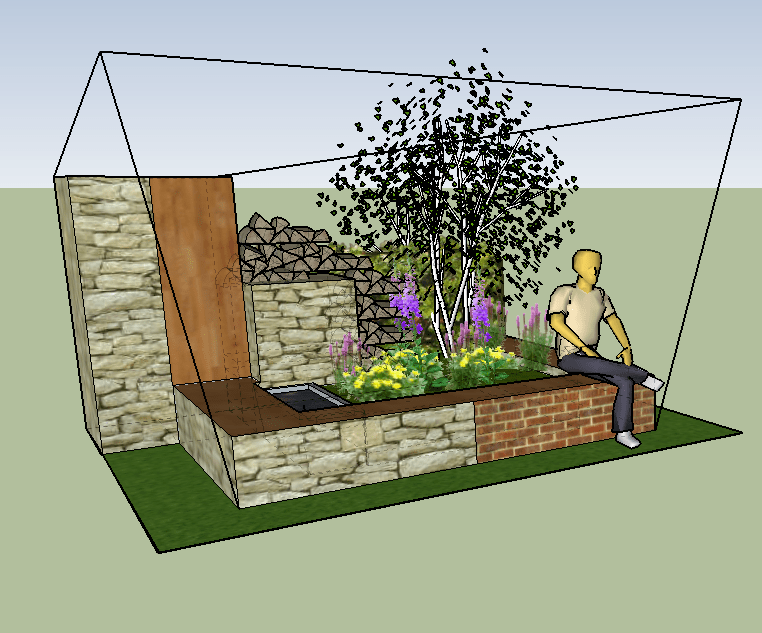
I recommended gabion cages, as a fun and modern yet practical solution to create a sympathetic style whilst not requiring skilled labour. These are filled with stone, reclaimed bricks and logs; each representing elements of the map. The brick represent the towns and the city of derby.
Screen Shot 2018-06-06 at 09.27.54
Derbyshire Wildlife Trust Garden Design – RHS Chatsworth 2018

The dark peak is represented with the tallest gabion pillar topped with heather. The white peak is the second gabion providing a focal point with a feature log pile tumbling down to a single specimen tree symbolising the woodland valleys. 

There is a nod to the Derbyshire farmland with mixed native hedging at the back of the design and an agricultural galvanised trough – which also holds a length of water for the Derbyshire rivers.

layout plan dwt:chats part scan
Layout Drawing

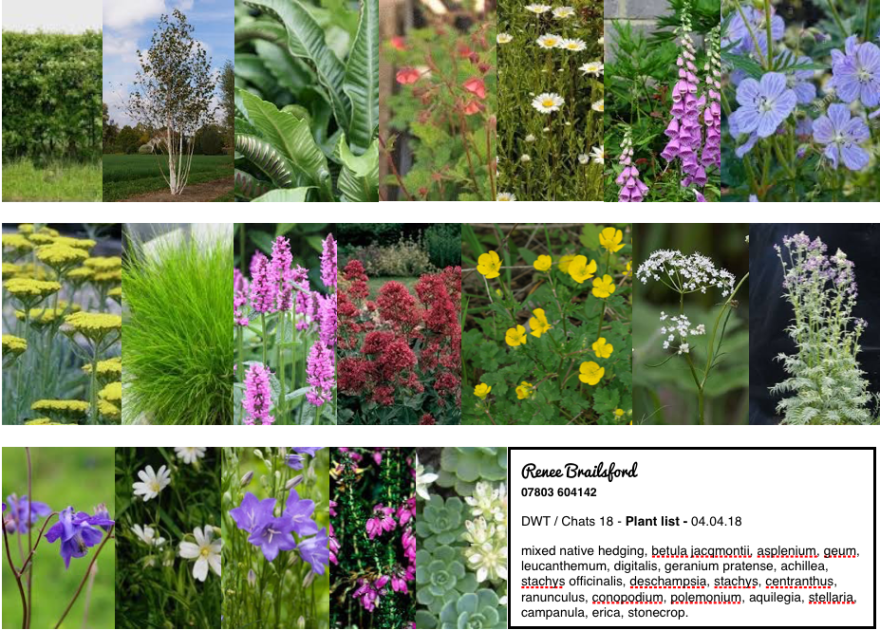
Once I had created a layout plan & an illustration, I turned my attention to developing the planting scheme. This starts with a long list of potential plants, which I then narrow down based on the brief. A broad mixture of wild flowers and garden cultivars were carefully selected to be beneficial to wildlife while reflecting our local landscape. Derbyshire has various habitats from moors to meadows and woodland valleys, so we used plants such as the cranesbill, yarrow, ox eye daisies, bulbous buttercups, grasses such as the stunning native deschampsia flexuousa. Finally shade loving foxgloves and ferns  are arranged around a multi stemmed silver birch tree. 
plant list RHS Chats 2018
Plant List

Finally I supplied a shopping list for all the materials and The Derbyshire Wildlife Trust team took the reins. They gathered materials and a team of willing volunteers to build the garden.

The aim was to create an engaging, tactile and social spot; a place for people to relax, chat and connect to nature at the show. Somewhere where people will be able to touch the water and get really close to the plants.

It was the first time I had designed anything to hand over in this way. As ever, things are always tweaked once building is underway, so there were some adjustments. There is so much pressure to get everything right and to be ready on time, but the team pulled it off!


For more information on Derbyshire Wildlife Trust click here.

Designing Resilient Gardens

It’s been a reflective few weeks here. Beginning with hearing a vision for the future of landscape architecture at the international ‘Landscape 50’ conference, hosted by The University of Sheffield. A major theme of the conference was adapting to climate change and population growth. The pressure on our green spaces will only increase in time, so it will become vital that we preserve our natural spaces, and adapt our enriching gardens.

‘We need to garden our wild and wild our gardens’  Thomas Rainer, author of Planting In A Post Wild World

Rainer, one of the ‘Landscape 50’ speakers, specialises in creating plant communities in man made settings. He talks of planting in vertical layers or ‘plant storeys’. When we observe  plants in wild plant communities, we see one plant emerging from beneath the canopy of others to pierce through and flower higher up.

Plant storeys, co exist or supersede each other, covering the soil. Think of the bluebells that carpet the woods in May, which are then hidden by maybe bracken, or cow parsley, then finally the tree canopy fills out and takes over the dominant photosynthesising.

A few days later I skipped off to enjoy the coastline of Pembrokeshire, with its stunning geology & wildlife. Being me, I was mostly struck by the flora and fauna – particularly the hedge-banks that characterise the area dividing lanes from fields. 

A hedge-bank is a cross between a wall and a hedge. Over time these rich habitats become covered with a fine tapestry of plants; ransoms, willow herb, navel wort, creeping dead nettle, herb robert, jack in the hedge, wood anemone, stinging nettle and sticky willy; great sounding characters and a wonderful example of plant communities in nature. It was a great opportunity for me to look and learn about the strength in diversity. Examining these plants and seeing how they worked together got me thinking about what the key considerations should be in making resilient gardens for the future.

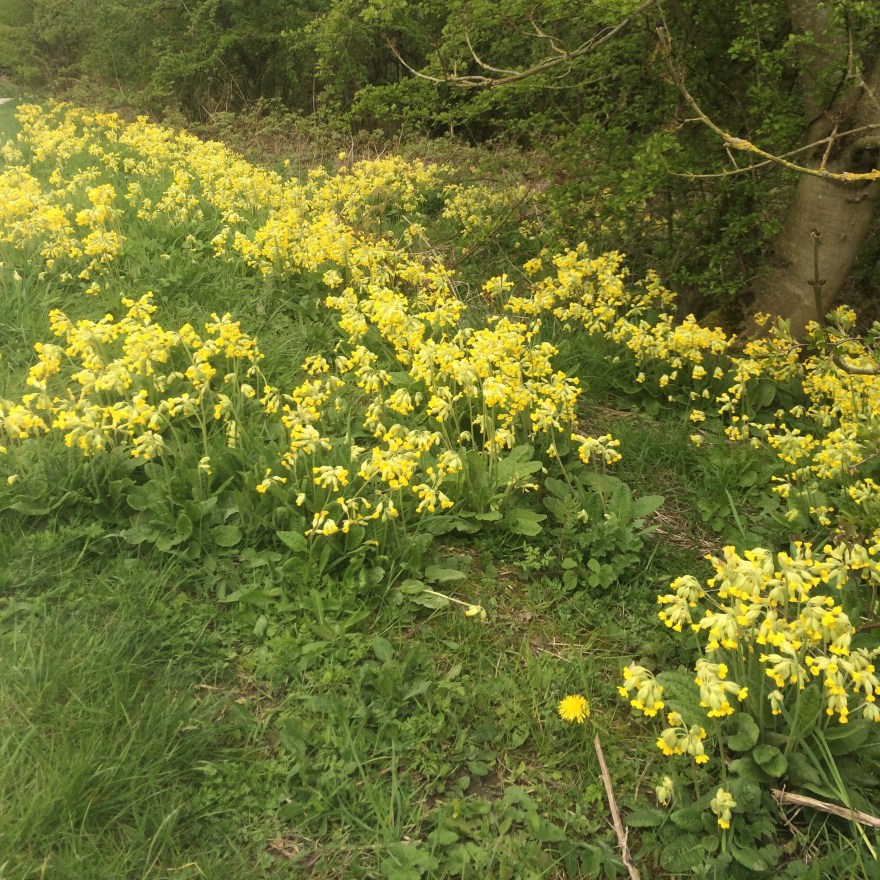
cowslips

So what exactly does the future hold? Along with a likely frost-free Britain, climate change is forecast to generate greater variables in the weather; more storms, more rainwater, and then longer hot dry spells; so resilient plants will become imperative. We will have a longer growing season and therefore can utilise plants from arid countries (in gardens where drainage isn’t an issue). 

Some solutions are split between urban and rural gardens where very different considerations are needed. For example; lawns, traditional and yet a high-energy use of space, will become a nuisance to maintain. A wilder aesthetic will suit rural gardens where big spaces allow for meadows, whereas in urban situations gravel gardens may be more appropriate.

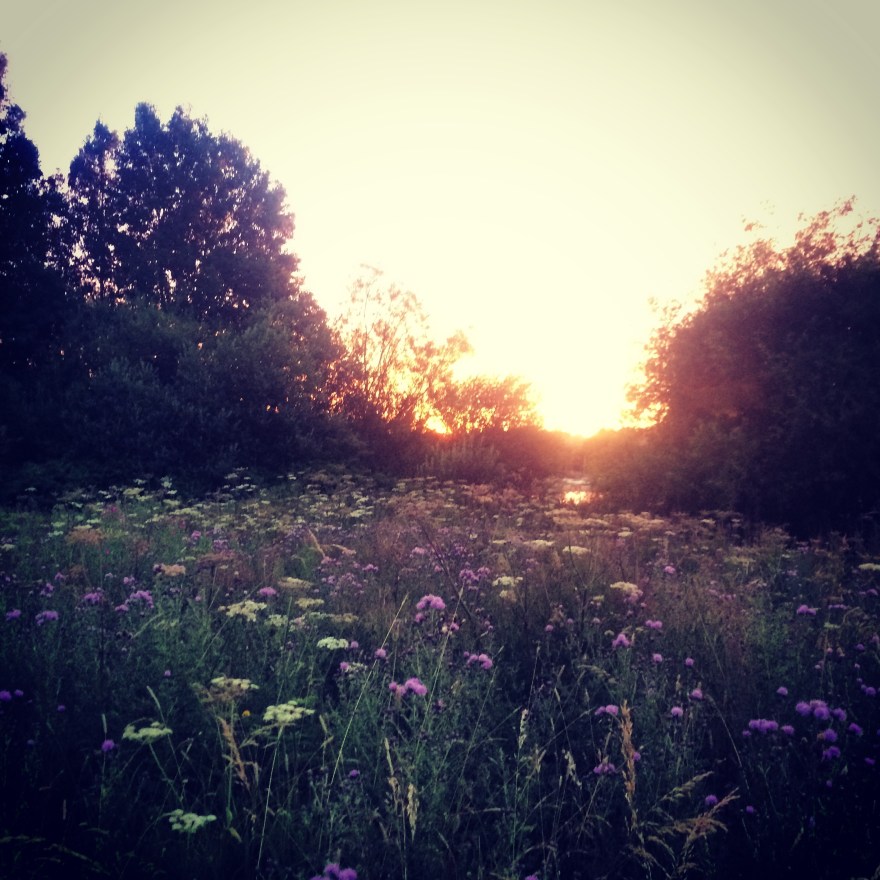
wildflower meadow

Things to consider when future proofing your garden

  • We can observe and work lightly with our plots rather than battle against them. For example by limiting earth moving, we can avoid interrupting natural water drainage routes.
  • Create shade and shelter to screen from heat and wind ensuring that spaces get maximum use in all weather. Using hedges and shrubs rather than fences or walls will soften wind, rather than creating further problems, as well as providing habitats for wildlife.

Drainage

  • Raised beds can help overcome waterlogging.
  • Look into SuDS (sustainable draining systems) for driveway surfaces. Note: impermeable hardstanding of more than 5m2 requires planning permission due to increased run-off and flash flooding issues.
  • Collect and harvest rainwater for use in the garden.
  • Intercept rainwater with green roofs to reduce run-off . Also, rainwater gardens can be designed to deal with heavy rainfall in built-up spaces.

Planting

  • Soil really matters. We usually concern ourselves with what we can see in our gardens but a deeper understanding of our soils will be invaluable. As well as protecting and nourishing our soil we can plant to benefit it too. Different root structures play important roles within plant communities; where for example a dandelion’s long tap root can access nutrients lower down in the soil, as its leaves die down they make those same nutrients available at surface level, in turn then feeding a foxglove perhaps, whose fine spider web of roots lie just millimetres under the surface.
  • Hooper’s Law is a guide to allow you to calculate the age of a hedgerow, by counting the number of species in it. Hedgerows are a plant community – and they gain species with age. Similarly the diversity of plants in a garden can be the strength of it.
  • Use perennial planting rather than annuals or bedding plants and keep soil covered to help preserve the soil structure. We now know for example that leaving soil exposed and turning it annually degrades the soil structure and its mycorrhizal networks.

‘There are more life forms in a handful of forest soil than there are people on the planet. A mere teaspoonful contains many miles of fungal filaments.’ Peter Wohlleben

  • Plant more woody plants, like shrubs and smaller trees, to lock up carbon; more evergreens especially.
  • Forest gardening – a low input way to grow your own food – mimicking a forest rather than an farmer’s field. More on this soon….

The RHS has more information on Gardening in a changing climate.